Live Odds Adjustments During Peak Racing Seasons and How Bettors Adapt Their Strategies
Written by Felix Russell · Aug 24, 2026
Live Odds Adjustments During Peak Racing Seasons and How Bettors Adapt Their Strategies
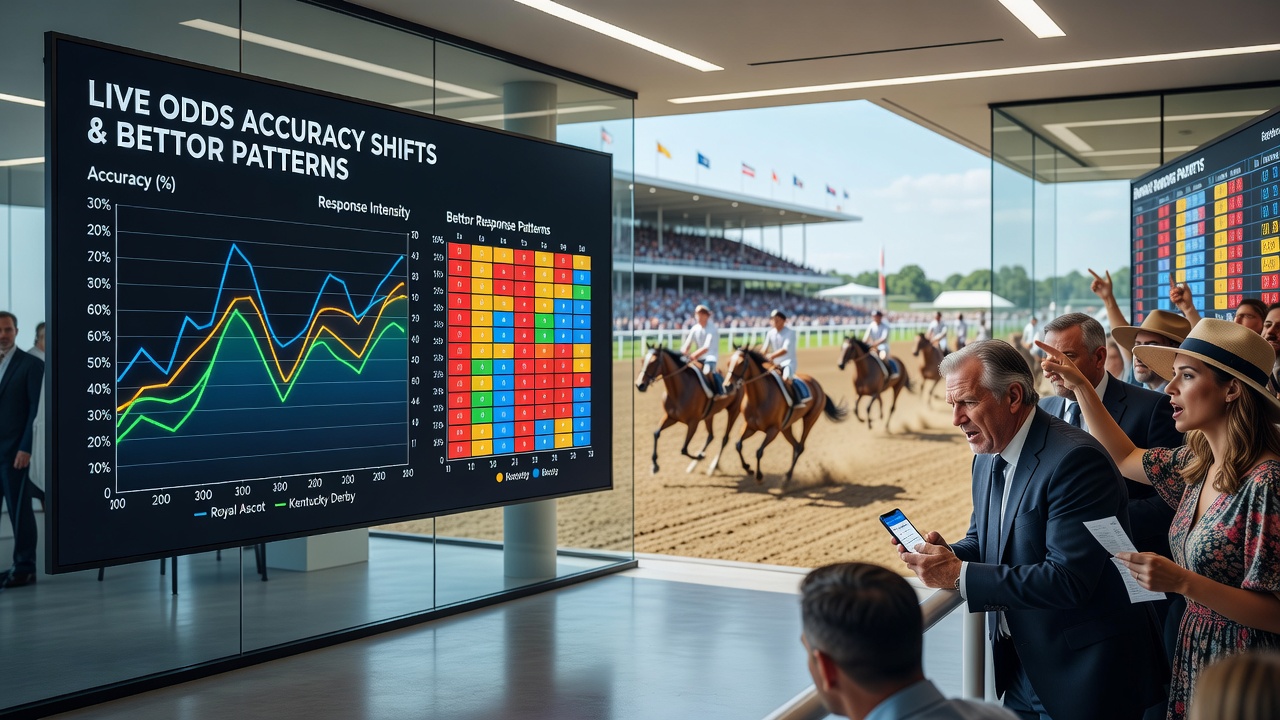
Live odds in horse racing shift rapidly when major festivals draw large volumes of bets, and these movements reflect both market activity and adjustments by odds compilers who monitor real-time data feeds. During events like the Cheltenham Festival or Royal Ascot, increased liquidity often leads to tighter spreads in the minutes before each race, while certain outcomes see wider swings when late information emerges about track conditions or jockey changes.
Key Drivers Behind Odds Fluctuations at Large-Scale Events
Volume spikes account for much of the movement, because a sudden influx of stakes on one horse forces compilers to recalibrate prices across the rest of the field to maintain margins. Weather updates, non-runners, and pace projections also feed into the process, and these factors combine during multi-day festivals where several races run in quick succession. Observers note that accuracy tends to improve as the day progresses, since compilers gain more data from earlier races on the same card and can apply those insights immediately.
Research from the Horse Racing Integrity and Safety Authority shows that live markets at major US tracks tighten by an average of 12 percent in the final ten minutes before post time during peak festival periods, compared with smaller midweek meetings. Similar patterns appear in other jurisdictions, where the concentration of professional syndicates and high-volume accounts creates sharper corrections once initial public money lands.
Bettor Behavior When Markets Move Quickly
Punters respond in several distinct ways once they detect sustained drift or contraction in the live market. Some place bets early to lock in a price before further movement occurs, while others wait for the line to stabilize and then target overlays that appear after heavy support on favorites. Data from festival periods reveals that exchange users often act as liquidity providers during these windows, taking the opposite side of large bets and thereby helping to restore balance across the book.
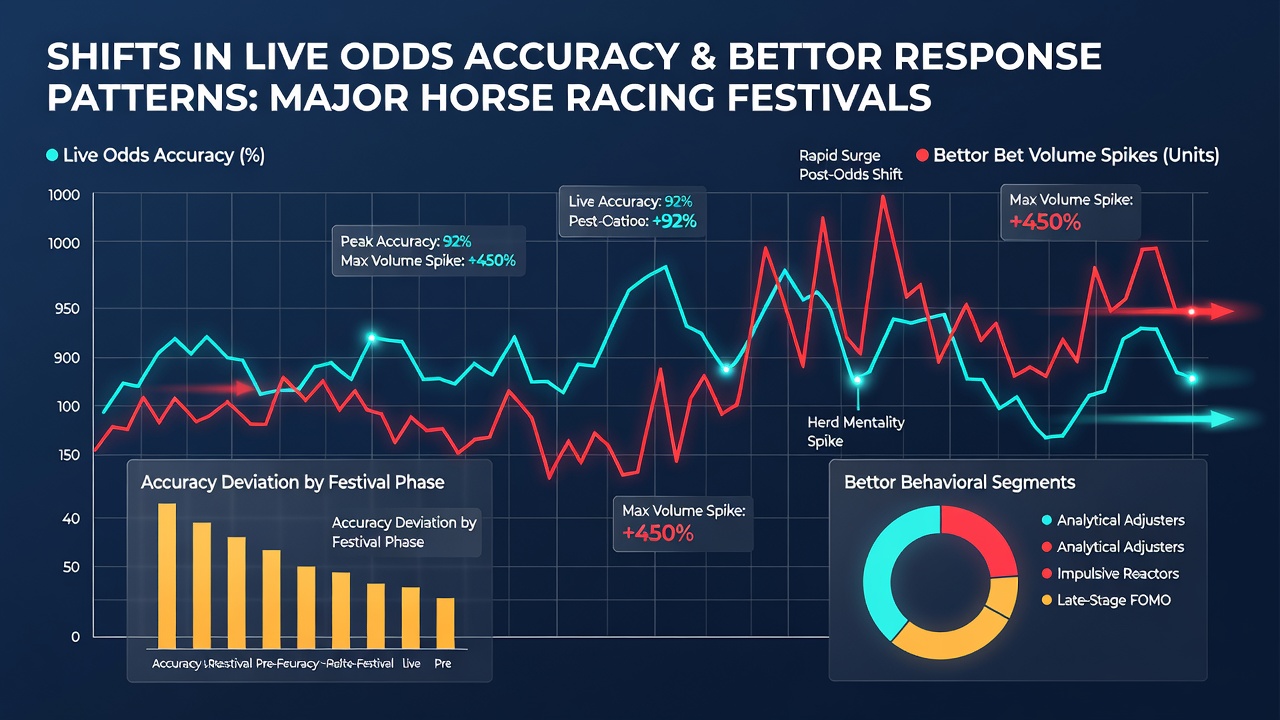
Those who track timing patterns frequently notice that certain horses attract late support only after the market has already moved several points, which can indicate either sharp information or simple momentum chasing. In either case the response tends to accelerate the existing trend rather than reverse it, and this dynamic repeats across successive races on the same card. August 2026 festival schedules are already generating early interest among data analysts who plan to compare live odds sequences from those events against historical benchmarks collected from 2024 and 2025 meetings.
Regional Differences in Market Response
European and North American festivals display measurable differences in how quickly odds settle after initial waves of betting. Markets at larger Australian tracks, for instance, often incorporate pace and sectional data more rapidly because those metrics are published in real time by official timing services. A report issued by Racing Australia highlights that live odds at major carnivals there adjust within 90 seconds of a significant sectional update, whereas comparable updates at some North American venues can take up to three minutes to appear in the displayed prices.
Industry groups such as the Association of Racing Commissioners International have documented that bettors who follow sectional trends tend to achieve steadier returns across festival weeks when they restrict wagers to races where live odds have already incorporated the latest pace figures. This approach reduces exposure to the brief periods of lower accuracy that occur immediately after a non-runner is declared or when track bias becomes evident only after the first few races.
Conclusion
Shifts in live odds accuracy during major horse racing festivals arise from a combination of betting volume, late information, and the speed at which compilers integrate new data. Bettor response patterns follow predictable paths once these movements begin, with early backers locking prices and later participants either chasing momentum or seeking overlays. Continued monitoring of these dynamics through 2026 events will provide further clarity on how markets evolve when festival schedules intensify.